MIT EC³ HUB
The researchers achieved this progress by using high-resolution 3D imaging to learn more about how the conductive carbon network—essentially, the electrode—functions and interacts with electrolytes. Equipped with their new understanding, the team experimented with different electrolytes and their concentrations. “We found that there is a wide range of electrolytes that could be viable candidates for ec3,” says Damian Stefaniuk, a research scientist at the MIT Electron-Conducting Carbon-Cement-Based Materials Hub, led by associate professor Admir Masic. “This even includes seawater, which could make this a good material for use in coastal and marine applications, perhaps as support structures for offshore wind farms.”
At the same time, the team streamlined the way electrolytes were added to the mix, making it possible to cast thicker electrodes that stored more energy.
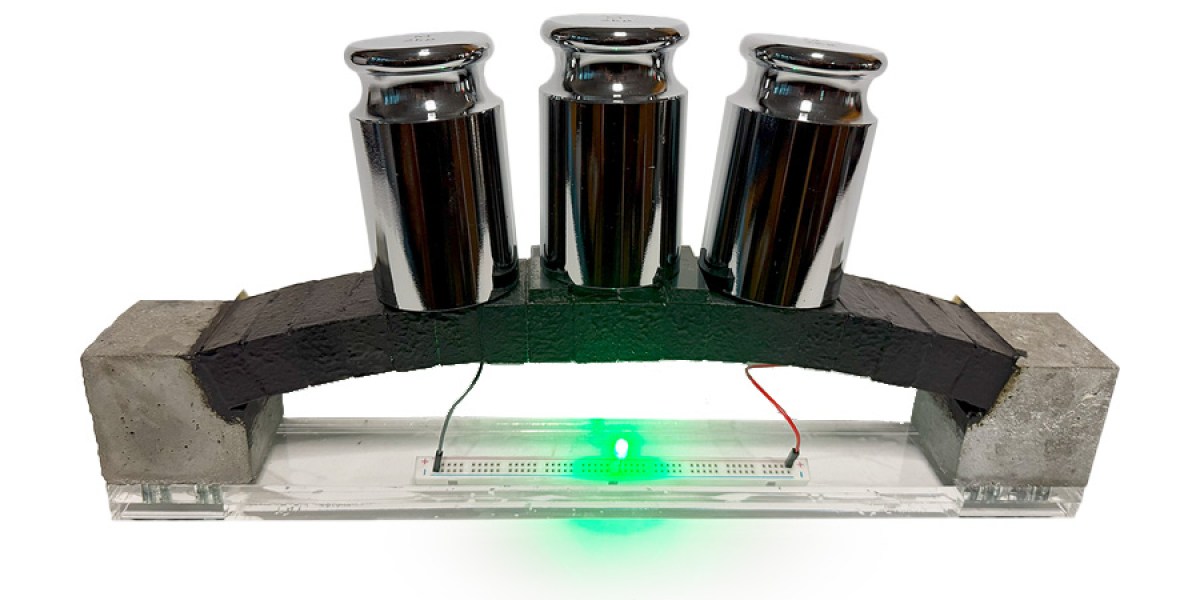
While ec3 doesn’t rival conventional batteries in energy density, itcan in principle be incorporated directly into architectural elements and last as long as the structure itself. To show how structural form and energy storage can work together, the team built a miniature arch that supported its own weight and an additional load while powering an LED light.
#Building #materials #closer #doubling #batteries