This is today’s edition of The Download, our weekday newsletter that provides a daily dose of what’s going on in the world of technology.
The first human test of a rejuvenation method will begin “shortly”
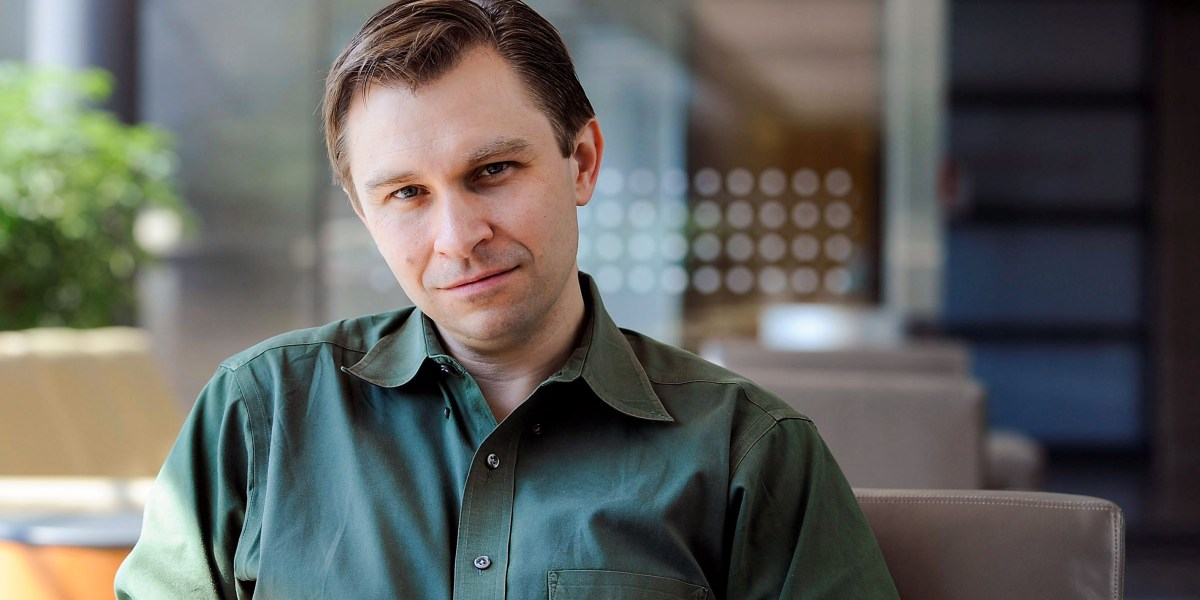
Life Biosciences, a small Boston startup founded by Harvard professor and life-extension evangelist David Sinclair, has won FDA approval to proceed with the first targeted attempt at age reversal in human volunteers.
The company plans to try to treat eye disease with a radical rejuvenation concept called “reprogramming” that has recently attracted hundreds of millions in investment for Silicon Valley firms like Altos Labs, New Limit, and Retro Biosciences, backed by many of the biggest names in tech. Read the full story.
—Antonio Regalado
Stratospheric internet could finally start taking off this year
Today, an estimated 2.2 billion people still have either limited or no access to the internet, largely because they live in remote places. But that number could drop this year, thanks to tests of stratospheric airships, uncrewed aircraft, and other high-altitude platforms for internet delivery.
Although Google shuttered its high-profile internet balloon project Loon in 2021, work on other kinds of high-altitude platform stations has continued behind the scenes. Now, several companies claim they have solved Loon’s problems—and are getting ready to prove the tech’s internet beaming potential starting this year. Read the full story.
—Tereza Pultarova
OpenAI’s latest product lets you vibe code science
OpenAI just revealed what its new in-house team, OpenAI for Science, has been up to. The firm has released a free LLM-powered tool for scientists called Prism, which embeds ChatGPT in a text editor for writing scientific papers.
The idea is to put ChatGPT front and center inside software that scientists use to write up their work in much the same way that chatbots are now embedded into popular programming editors. It’s vibe coding, but for science. Read the full story.
—Will Douglas Heaven
MIT Technology Review Narrated: This Nobel Prize–winning chemist dreams of making water from thin air
Most of Earth is covered in water, but just 3% of it is fresh, with no salt—the kind of water all terrestrial living things need. Today, desalination plants that take the salt out of seawater provide the bulk of potable water in technologically advanced desert nations like Israel and the United Arab Emirates, but at a high cost.
Omar Yaghi, is one of three scientists who won a Nobel Prize in chemistry in October 2025 for identifying metal-organic frameworks, or MOFs—metal ions tethered to organic molecules that form repeating structural landscapes. Today that work is the basis for a new project that sounds like science fiction, or a miracle: conjuring water out of thin air.
This is our latest story to be turned into a MIT Technology Review Narrated podcast, which we’re publishing each week on Spotify and Apple Podcasts. Just navigate to MIT Technology Review Narrated on either platform, and follow us to get all our new content as it’s released.
The must-reads
I’ve combed the internet to find you today’s most fun/important/scary/fascinating stories about technology.
1 TikTok has settled its social media addiction lawsuit
Just before it was due to appear before a jury in California. (NYT $)
+ But similar claims being made against Meta and YouTube will proceed. (Bloomberg $)
2 AI CEOs have started condemning ICE violence
While simultaneously praising Trump. (TechCrunch)
+ Apple’s Tim Cook says he asked the US President to “deescalate” things. (Bloomberg $)
+ ICE seems to have a laissez faire approach to preserving surveillance footage. (404 Media)
3 Dozens of CDC vaccination databases have been frozen
They’re no longer being updated with crucial health information under RFK Jr. (Ars Technica)
+ Here’s why we don’t have a cold vaccine. Yet. (MIT Technology Review)
4 China has approved the first wave of Nvidia H200 chips
After CEO Jensen Huang’s strategic visit to the country. (Reuters)
5 Inside the rise of the AI “neolab”
They’re prioritizing longer term research breakthroughs over immediate profits. (WSJ $)
6 How Anthropic scanned—and disposed of—millions of books 
In an effort to train its AI models to write higher quality text. (WP $)
7 India’s tech workers are burning out
They’re under immense pressure as AI gobbles up more jobs. (Rest of World)
+ But the country’s largest IT firm denies that AI will lead to mass layoffs. (FT $)
+ Inside India’s scramble for AI independence. (MIT Technology Review)
8 Google has forced a UK group to stop comparing YouTube to TV viewing figures
Maybe fewer people are tuning in than they’d like to admit? (FT $)
9 RIP Amazon grocery stores 
The retail giant is shuttering all of its bricks and mortar shops. (CNN)
+ Amazon workers are increasingly worried about layoffs. (Insider $)
10 This computing technique could help to reduce AI’s energy demands
Enter thermodynamic computing. (IEEE Spectrum)
+ Three big things we still don’t know about AI’s energy burden. (MIT Technology Review)
Quote of the day
“Oh my gosh y’all, IG is a drug.”
—An anonymous Meta employee remarks on Instagram’s addictive qualities in an internal document made public as part of a social media addiction trial Meta is facing, Ars Technica reports.
One more thing

How AI and Wikipedia have sent vulnerable languages into a doom spiral
Wikipedia is the most ambitious multilingual project after the Bible: There are editions in over 340 languages, and a further 400 even more obscure ones are being developed. But many of these smaller editions are being swamped with AI-translated content. Volunteers working on four African languages, for instance, estimated to MIT Technology Review that between 40% and 60% of articles in their Wikipedia editions were uncorrected machine translations.
This is beginning to cause a wicked problem. AI systems learn new languages by scraping huge quantities of text from the internet. Wikipedia is sometimes the largest source of online linguistic data for languages with few speakers—so any errors on those pages can poison the wells that AI is expected to draw from. Volunteers are being forced to go to extreme lengths to fix the issue, even deleting certain languages from Wikipedia entirely. Read the full story.
—Jacob Judah
We can still have nice things
A place for comfort, fun and distraction to brighten up your day. (Got any ideas? Drop me a line or skeet ’em at me.)
+ This singing group for people in Amsterdam experiencing cognitive decline is enormously heartwarming ($)
+ I enjoyed this impassioned defense of the movie sex scene.
+ Here’s how to dress like Steve McQueen (inherent cool not included, sorry)
+ Trans women are finding a home in the beautiful Italian town of Torvajanica 
#Download #bid #treat #blindness #bridging #internet #divide