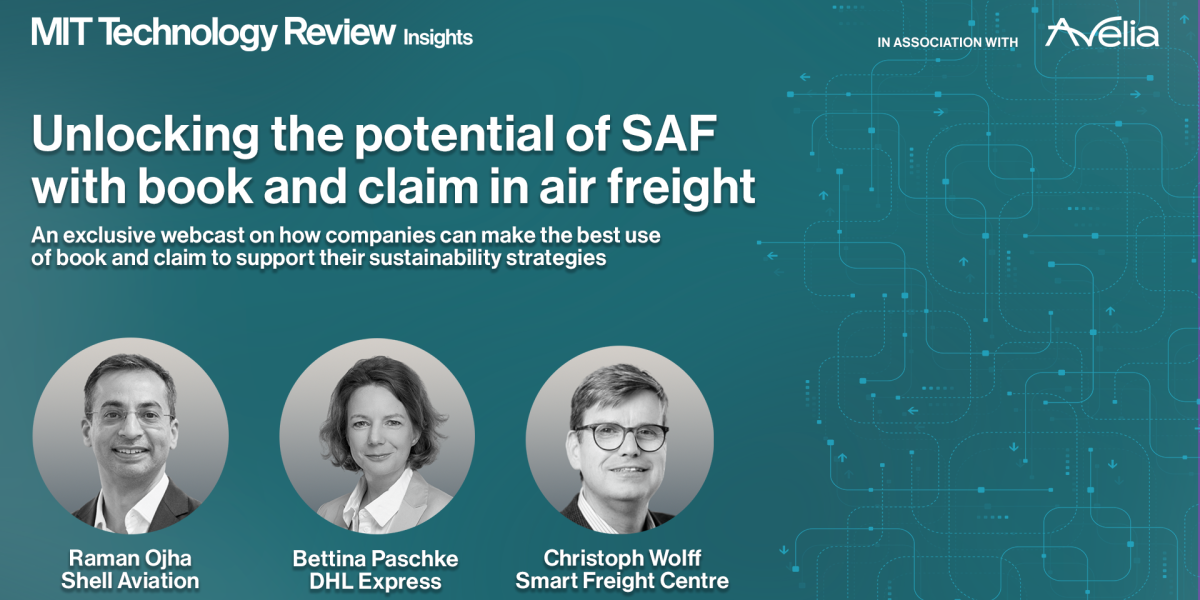
“SAF is central to the decarbonization of the aviation sector,” believes Raman Ojha, president of Shell Aviation. “Having said that, adoption and penetration of SAF hasn’t really picked up massively. It’s not due to lack of production capacity, but there are lots of things that are at play. And book and claim in that context helps to bridge that gap.”
Bridging the gap with book and claim
Book and claim is a chain of custody model, where the flow of administrative records is not necessarily connected to the physical product through the supply chain (source: ISO 22095:2020).
Book and claim potentially enables airlines and corporations to access the life cycle GHG emissions reduction benefits of SAF relative to conventional jet fuel even when SAF is not physically available at their location; this model helps bridge the gap between that concentrated supply and global demand, until SAF’s availability improves.
“To be bold, without book and claim, no short-term science-based target will be achieved,” says Bettina Paschke, vice president of ESG accounting, reporting and controlling at DHL Express. “Book and claim is essential to achieving science-based targets.”
“SAF production facilities are not everywhere,” she reiterates. “They’re very focused on one location, and if a customer wants to fulfil a mass balance obligation, SAF would need to be shipped around the world just to be at that airport for that customer. That would be very complicated, and very unrealistic.” It would also, counterintuitively, increase total emissions. By using book and claim instead, air freight operators can unlock the life cycle greenhouse gas emissions reduction benefits of SAF relative to conventional jet fuel now, without waiting for supply to broaden. “It might no longer be needed when we have SAF product facilities at each airport in the future,” she points out. “But at the moment, that’s not the case.”
At DHL itself, the mechanism has become central to achieving its own three interconnected sustainability pillars, which focus on decarbonizing logistics supply chains, supporting customers toward their decarbonization goals, and ensuring credible emission claims can be shared along the value chain.
Demonstrating the importance of a credible and viable framework for book and claim systems is also what inspired the 2022 launch of Shell’s Avelia, one of the first blockchain-powered digital SAF book and claim solutions for aviation, which expanded in 2024 to encompass air freight in addition to business travel. Depending on the offering, Avelia offers freight forwarders the opportunity to share the life cycle greenhouse gas emissions reduction benefits of SAF relative to conventional jet fuel across the value chain with shippers using their services.
“It’s also backed by a physical supply chain, which gives our customers — whether those be corporates or freight forwarders or even airlines — a peace of mind that the SAF has been injected at a certain airport, it’s been used and environmental attributes, with the help of blockchain, have been tracked to where they’re getting retired,” says Ojha.
#Mitigating #emissions #air #freight #Unlocking #potential #SAF #book #claim