One of my favorite stories in that package comes from my colleague David Rotman, who took a hard look at AI for materials research. AI could transform the process of discovering new materials—innovation that could be especially useful in the world of climate tech, which needs new batteries, semiconductors, magnets, and more.
But the field still needs to prove it can make materials that are actually novel and useful. Can AI really supercharge materials research? What could that look like?
For researchers hoping to find new ways to power the world (or cure disease or achieve any number of other big, important goals), a new material could change everything.
The problem is, inventing materials is difficult and slow. Just look at plastic—the first totally synthetic plastic was invented in 1907, but it took until roughly the 1950s for companies to produce the wide range we’re familiar with today. (And of course, though it is incredibly useful, plastic also causes no shortage of complications for society.)
In recent decades, materials science has fallen a bit flat—David has been covering this field for nearly 40 years, and as he puts it, there have been just a few major commercial breakthroughs in that time. (Lithium-ion batteries are one.)
Could AI change everything? The prospect is a tantalizing one, and companies are racing to test it out.
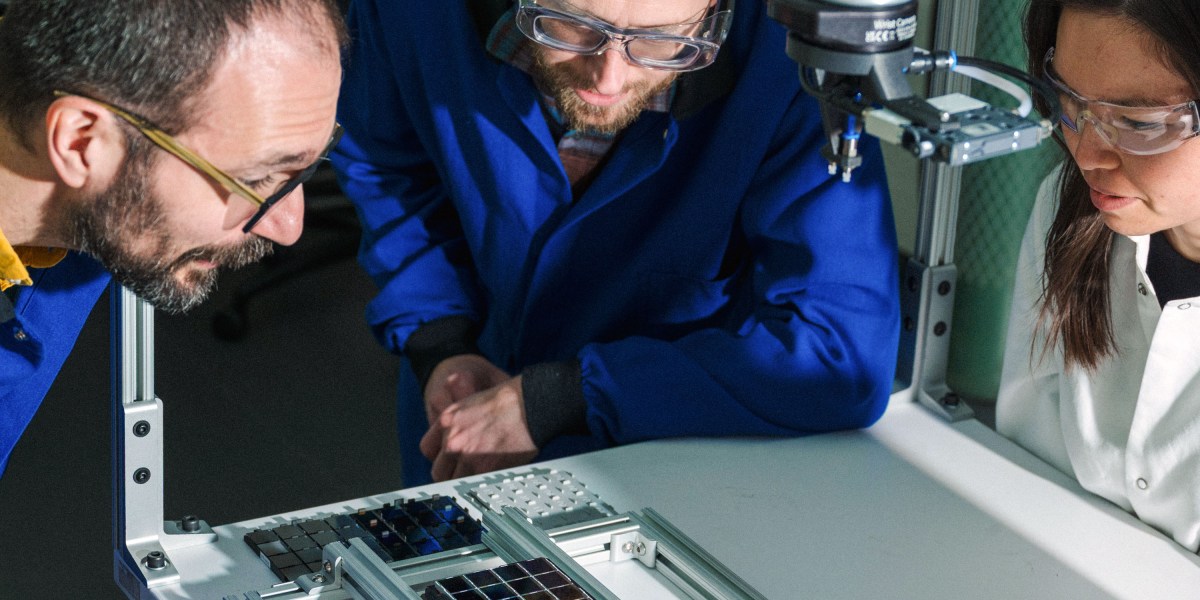
Lila Sciences, based in Cambridge, Massachusetts, is working on using AI models to uncover new materials. The company can not only train an AI model on all the latest scientific literature, but also plug it into an automated lab, so it can learn from experimental data. The goal is to speed up the iterative process of inventing and testing new materials and look at research in ways that humans might miss.
At an MIT Technology Review event earlier this year, I got to listen to David interview Rafael Gómez-Bombarelli, one of Lila’s cofounders. As he described what the company is working on, Gómez-Bombarelli acknowledged that AI materials discovery hasn’t yet seen a big breakthrough moment. Yet.
#discover #materials