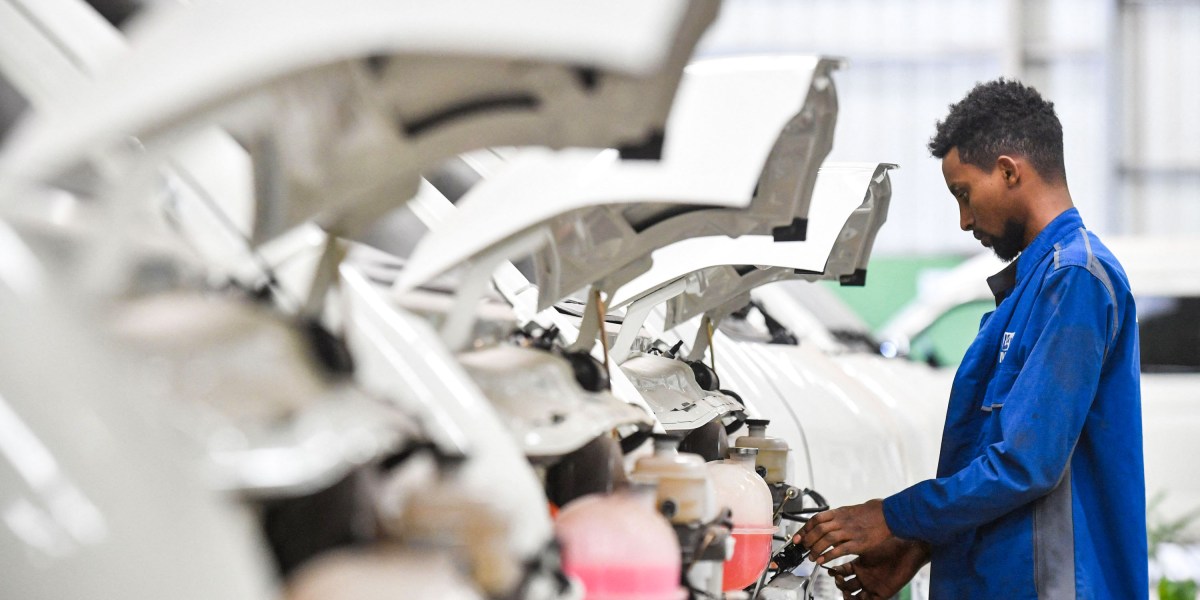
But there are some signs of progress. I just finished up a story about the economic case: A recent study in Nature Energy found that EVs from scooters to minibuses could be cheaper to own than gas-powered vehicles in Africa by 2040.
If there’s one thing to know about EVs in Africa, it’s that each of the 54 countries on the continent faces drastically different needs, challenges, and circumstances. There’s also a wide range of reasons to be optimistic about the prospects for EVs in the near future, including developing policies, a growing grid, and an expansion of local manufacturing.
Even the world’s leading EV markets fall short of Ethiopia’s aggressively pro-EV policies. In 2024, the country became the first in the world to ban the import of non-electric private vehicles.
The case is largely an economic one: Gasoline is expensive there, and the country commissioned Africa’s largest hydropower dam in September 2025, providing a new source of cheap and abundant clean electricity. The nearly $5 billion project has a five-gigawatt capacity, doubling the grid’s peak power in the country.
Much of Ethiopia’s vehicle market is for used cars, and some drivers are still opting for older gas-powered vehicles. But this nudge could help increase the market for EVs there.
Other African countries are also pushing some drivers toward electrification. Rwanda banned new registrations for commercial gas-powered motorbikes in the capital city of Kigali last year, encouraging EVs as an alternative. These motorbike taxis can make up over half the vehicles on the city’s streets, so the move is a major turning point for transportation there.
Smaller two- and three-wheelers are a bright spot for EVs globally: In 2025, EVs made up about 45% of new sales for such vehicles. (For cars and trucks, the share was about 25%.)
#EVs #gaining #ground #Africa